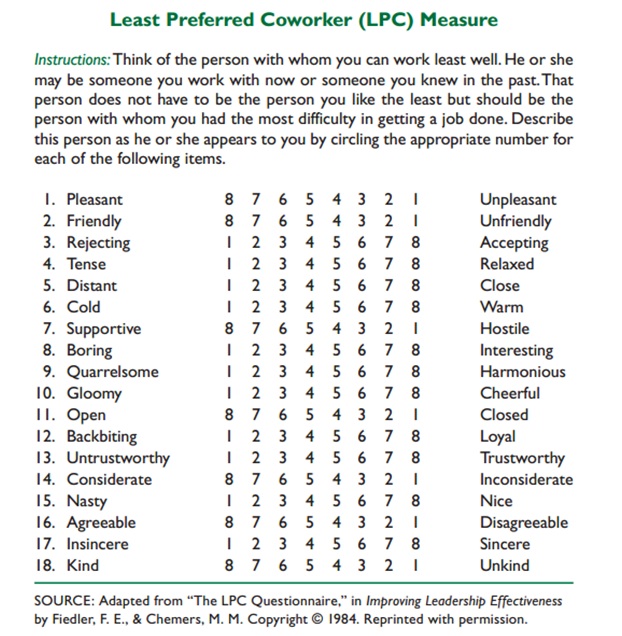
1. Least Preferred Co-worker(LPC) Measure
Your final LPC score is the sum of the numbers you circled on the 18 scales. If your score is 57 or below, you are a low LPC, which suggests that you are task motivated. If your score is within the range of 58 to 63, you are a middle LPC, which means you are independent. People who score 64 or above are called high LPCs, and they are thought to be more relationship motivated. Because the LPC is a personality measure, the score you get on the LPC scale is believed to be quite stable over time and not easily changed. Low LPCs tend to remain low, moderate LPCs tend to remain moderate, and high LPCs tend to remain high. As was pointed out earlier in the chapter, research shows that the test–retest reliability of the LPC is very strong (Fiedler & Garcia, 1987).
2. Working Styles Survey (by Bill Heaseman)
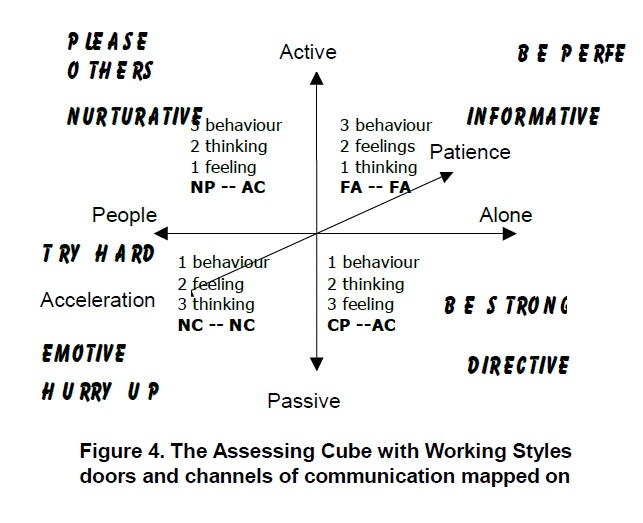
Working Styles를 다음의 다섯가지로 분류한 Frame. - Be Strong
- Be Perfect
- Please Others
- Try hard
- Hurry Up
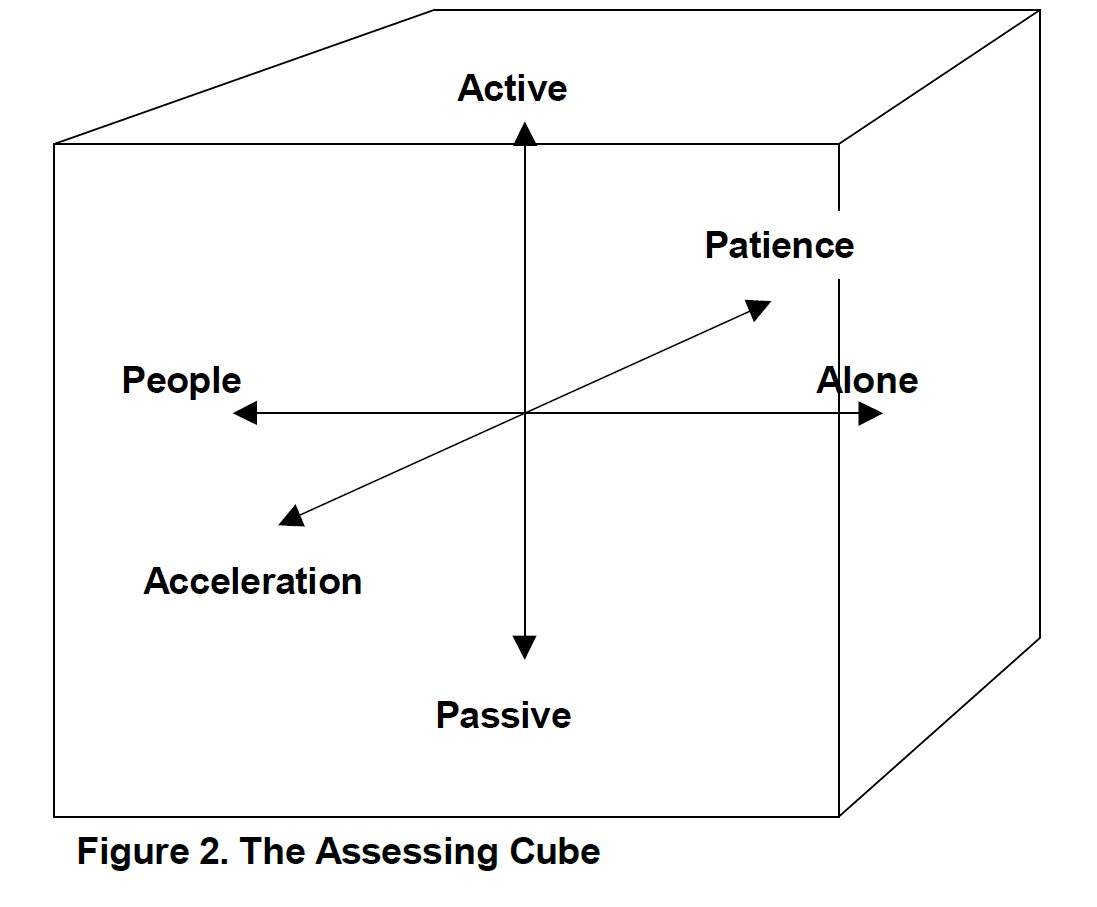
- ACTIVE: The extent to which people invest energy to set their own goals and are self motivated to complete tasks. They are the people that pull or push others. Someone who greets you or initiates conversation is likely to be toward the Active end.
- PASSIVE: The degree to which people follow goals and objectives set by others.Waiting for things to happen and reacting to situations. Being pulled and following others.
- PEOPLE: Gravitating towards people and preferring to work with people, particularly groups.
- ALONE: preferring to work alone or with just one other person.
- ACCELERATION: The degree to how quickly things are done. At work this would mean making quick decisions and working at a fast pace.
- PATIENCE: This involves people wanting to take a run up to things, it would involve working in a measured, cautious and slow way.
CHANNELS AND DOORS OF COMMUNICATION Kahler identified five channels of communication which are complimentary transactions leading to effective communication. They are: - - Emotive
- Nurturative
- Informative
- Directive
- Interventive
Paul Ware identified three modes of communication which he termed ‘Doors to Therapy’ (5). Since this paper is for understanding organisational behaviour these are termed‘doors to communication’. These fall into three categories. These are: 1 Open Door. This is the mode of communication that people use to make contact with others 2 Target Door. This is the mode of communication that they respond to well and leads to deeper and more meaningful contact. 3 Trapdoor. This mode of communication has the tendency to close people down as it indicates areas for their personal development. These types or methods of communication fall into three broad areas. They are: FEELINGS, THINKING, and BEHAVIOUR.
<References> Bill Heasman © September 2000 - Taibi Kahler and Hedges Capers, The Mini Script Transactional Analysis Journal, Volume 4, No 1, 1974
- Taibi Kahler, Managing with the Process Communication Model. Human Development Associates,1980
- Paul Ware, Personality Adaptations (Doors to Therapy), Transactional Analysis Journal, Volume 13, No1, 1983
|
Sung Youn PAK, Oct 23, 2012, 9:38 AM v.3 Sung Youn PAK, Oct 23, 2012, 9:38 AM v.3 Sung Youn PAK, Oct 23, 2012, 9:38 AM v.3 |